Science for every species
Nucli

Equine research · Veterinary professionals

Clinical studies.
Clearer context.

Explore the safety data, clinical observations and real-world case reports informing the next phase of equine peptide research.

Featured research

A closer look at safety.

Read the full report alongside its study population, observation period and clinical findings.

Equine safety study · Nucli edition

Safety of Injectable BPC-157 and TB-500 in Adult Horses

Eleven adult horses undergoing controlled rehabilitation for naturally occurring soft tissue or bone injuries were evaluated during a 40-day intervention and a 30-day follow-up.

Download the safety study

Email required · PDF · 7 pages · Full report, figure and references

  • No adverse events reportedNo injection-site reactions or clinically relevant physical-exam abnormalities were reported during the study and follow-up.
  • 34 of 40 blood parameters unchanged statisticallySix showed statistically significant differences. Red-cell indices, glucose and CK remained within laboratory reference ranges; mildly low globulins were reported in five horses at various timepoints.
  • Findings within a defined study settingThe report concerns 11 horses and the stated observation period. It does not establish efficacy or safety for every horse, dose or duration.
11adult horses
40days of intervention
30days of follow-up
This Nucli edition preserves the original study text, clinical figure, references and supplier disclosure. Study authorship and the historical source of study materials remain identified in the report.

From equine practice

Five cases.
The details behind each.

Individual case reports document the patient, concurrent treatments and observed course. They provide clinical context for further investigation, rather than controlled evidence of treatment efficacy.

Download all five handouts Print-ready PDF · 5 pages · US Letter
Case 01 · 40-day course

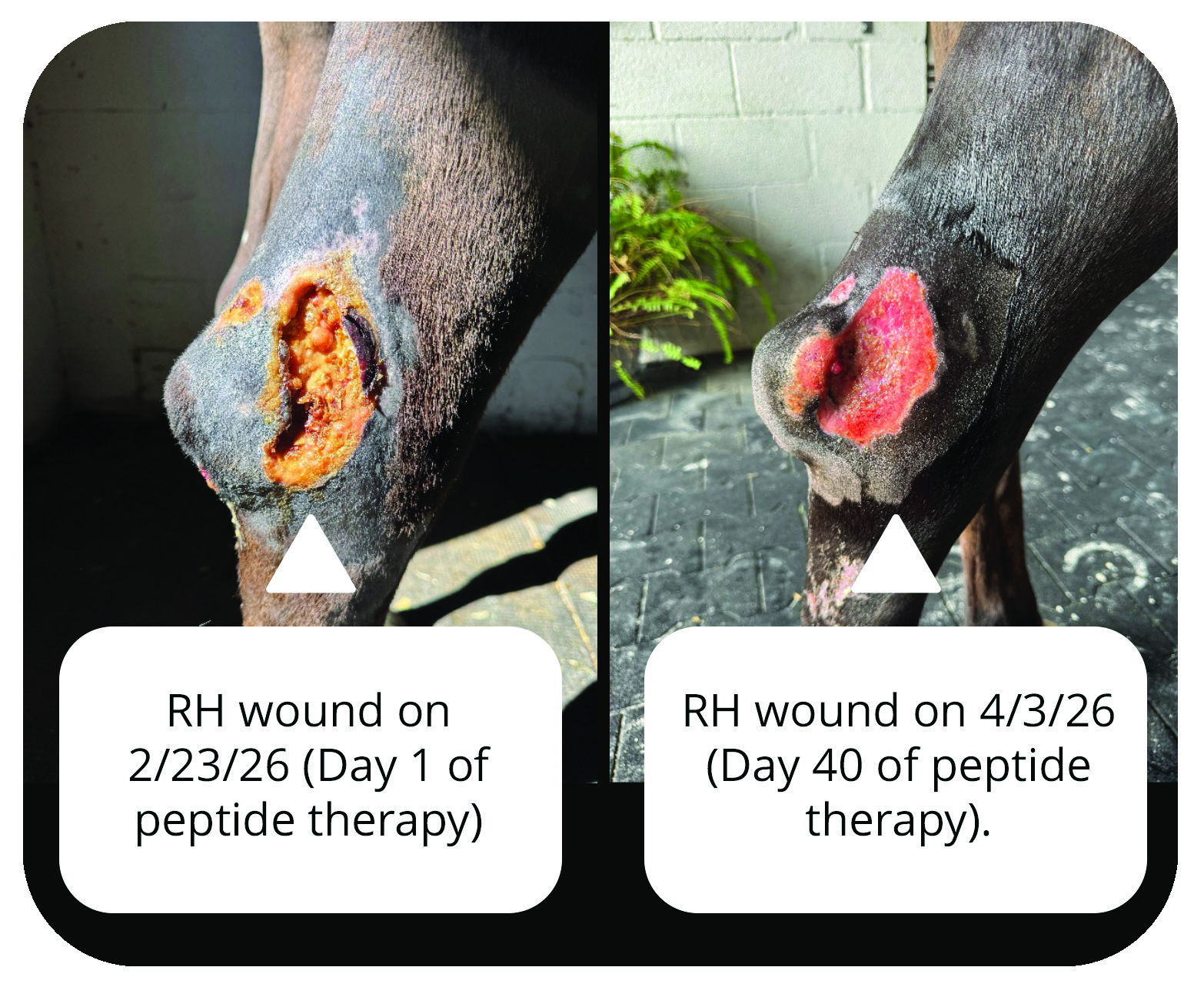
Large Wound

Original clinical comparison images from the Large Wound case report

A 16-year-old Quarter Horse developed a large necrotic wound after lymphangitis and cellulitis. During combined care, the clinician reported increased healthy granulation tissue, reduced discharge and filling of the tissue defect over 40 days.

Read the clinical details

Case study: The patient, a 16-year-old quarter horse gelding, suffered a large necrotic wound to the right lateral hock and calcanean bursa following a severe episode of lymphangitis and cellulitis. The wound was initially treated aggressively with antibiotics, administered systemically and by regional limb perfusion. Peptide therapy was initiated after 6 days following concerns over marked tissue loss and communication with deep synovial structures.

Treatment: Daily subcutaneous injection of BPC-157/TB-500 for 40 days starting 2/23/26. Systemic antibiotics. Weekly bandage changes through 3/9/2026.

Reported outcome: Following initiation of peptide therapy, the wound showed increased production of healthy, uniform granulation tissue with a notable reduction of discharge. The patient remained comfortable and the edematous swelling of the RH improved each week during therapy. Following 40 days of peptide therapy, the large cavity left by the loss of necrotic and infected soft tissue had granulated to the level of the surrounding skin.

Download print handout

PDF · 1 page · 16-year-old Quarter Horse gelding

Case 02 · 6-month course

Superficial Digital Flexor Tendinopathy

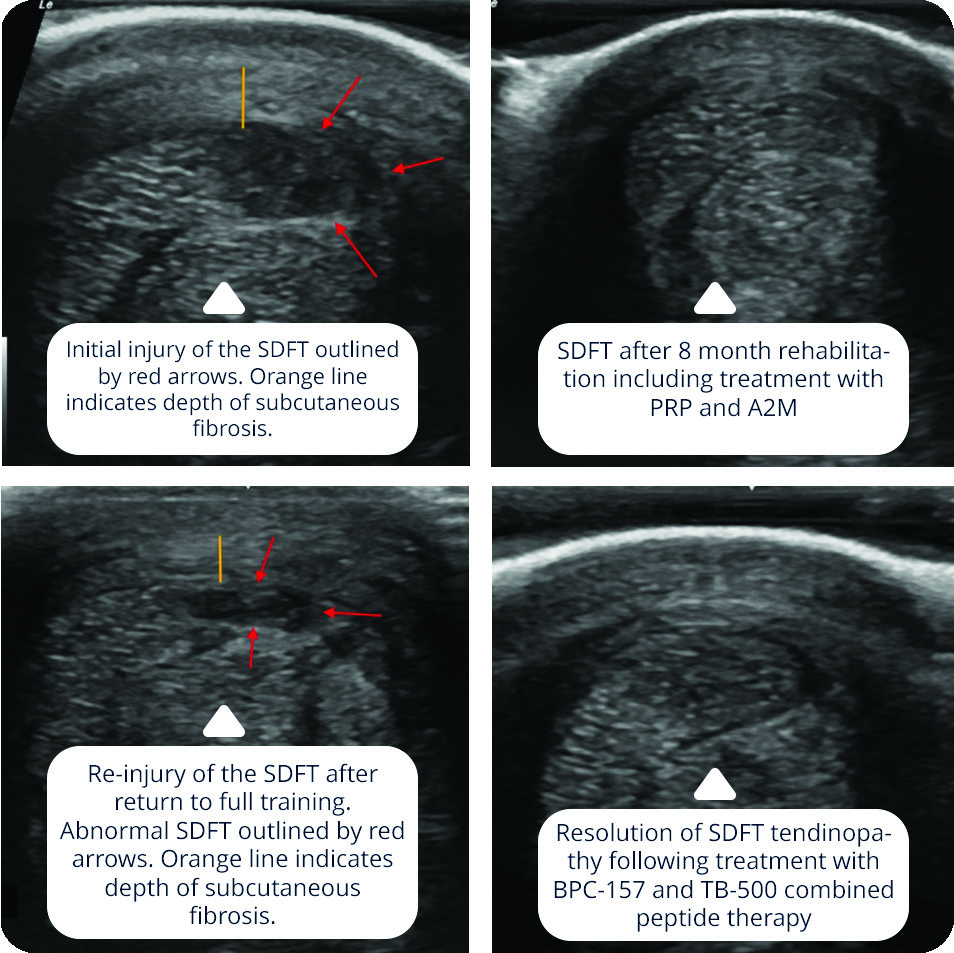
Original clinical comparison images from the Superficial Digital Flexor Tendinopathy case report

A 12-year-old Lusitano with recurrent superficial digital flexor tendinopathy remained in full dressage training without recurrence of clinical signs after the reported treatment course. Recheck ultrasound findings are included in the report.

Read the clinical details

Case study: 12-year-old Lusitano gelding used for dressage that initially presented with grade 1.5/5 right forelimb lameness due to superficial flexor tendinopathy. Initial treatment consisted of ultrasound-guided PRP and A2M injections followed by a structured rehabilitation protocol. Follow-up ultrasound exam showed resolution of the lesion, and the horse underwent a gradual return to full work.

Clinical course: Unfortunately, the horse experienced intermittent episodes of lameness associated with localized heat and swelling of the affected tendon that were consistent with ultrasound evidence of inflammation. The episodes improved with rest but showed a tendency to recur when the horse resumed full work intensity.

Treatment: Peptide therapy was initiated to address the recurrent nature of the injury, with subcutaneous injections of BPC-157/TB-500 given 5 days per week for 6 months.

Reported outcome: Since initiating peptide therapy, the horse has maintained full dressage training without recurrence of clinical signs. No further episodes of tendon-associated lameness, heat, or sensitivity have been observed. Recheck ultrasound examination shows normal collagen fiber alignment and minimal subcutaneous fibrosis associated with the RF SDFT.

Download print handout

PDF · 1 page · 12-year-old Lusitano gelding

Case 03 · 40-day course

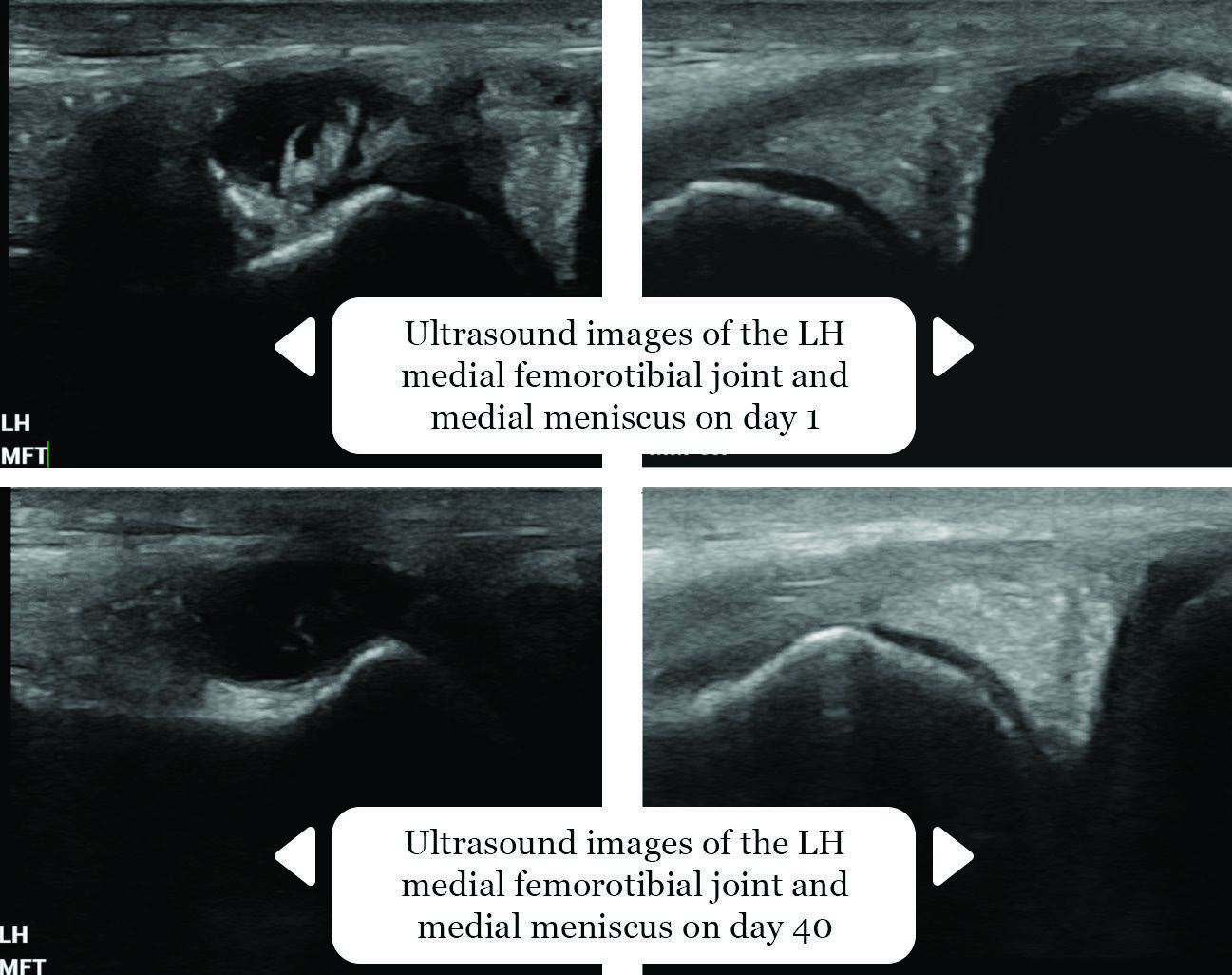
Meniscus Tear

Original clinical comparison images from the Meniscus Tear case report

A 19-year-old Mustang with medial femorotibial synovitis and a medial meniscus tear received PRP and a 40-day peptide course. Follow-up gait analysis and ultrasound showed improvement reported by the treating clinician.

Read the clinical details

Case study: The patient, a 19-year-old mustang gelding used for dressage, was evaluated for grade 2/5 lameness of the left hind. Ultrasound examination revealed marked synovitis of the medial femorotibial joint and an acute tear of the medial meniscus.

Treatment: Single injection of the left hind femorotibial joint with PRP. Daily subcutaneous injection of BPC-157/TB-500 for 40 days starting 1/6/26.

Reported outcome: The patient showed marked improvement of left hind lameness which was verified using objective gait analysis (Sleip). Repeat ultrasound examination showed significant improvement of the medial femorotibial joint and medial meniscus.

Download print handout

PDF · 1 page · 19-year-old Mustang gelding

Case 04 · 40-day course

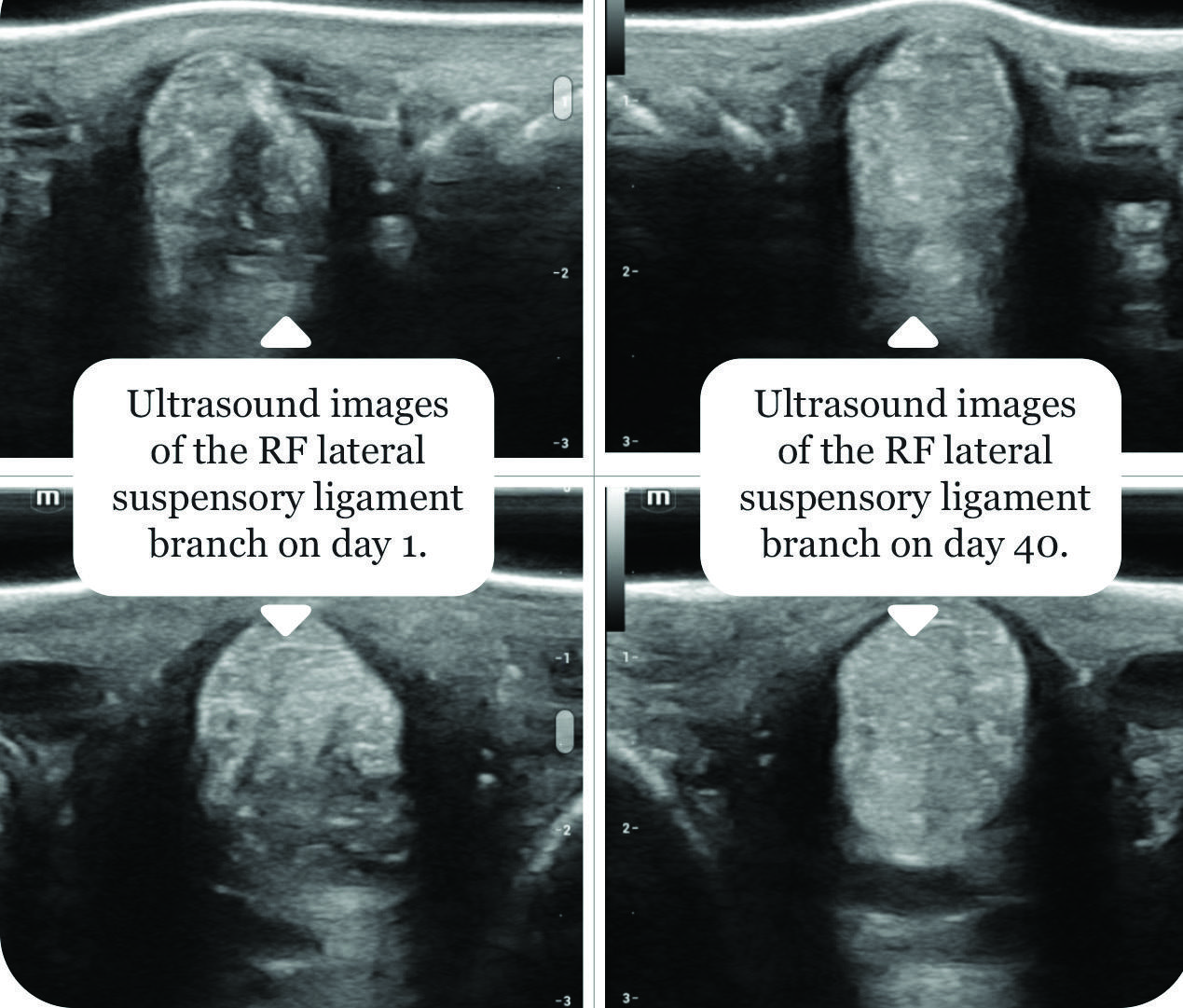
Suspensory Branch Desmopathy

Original clinical comparison images from the Suspensory Branch Desmopathy case report

An 11-year-old KWPN jumper with right-front lateral suspensory branch desmopathy received shockwave therapy alongside a 40-day peptide course. Follow-up gait analysis and ultrasound findings are documented.

Read the clinical details

Case study: 11-year-old KWPN gelding jumper diagnosed with severe desmopathy of the right front lateral suspensory ligament branch causing grade 2/5 lameness.

Treatment: Electrohydraulic extracorporeal shockwave and daily subcutaneous injection of BPC-157/TB-500 for 40 days starting 10/23/25.

Reported outcome: Follow-up exam on 12/2/2025 showed significant improvement of RF lameness using Sleip objective gait analysis and marked improvement of the ultrasound appearance of the RF lateral suspensory ligament branch.

Download print handout

PDF · 1 page · 11-year-old KWPN gelding

Case 05 · 40-day course

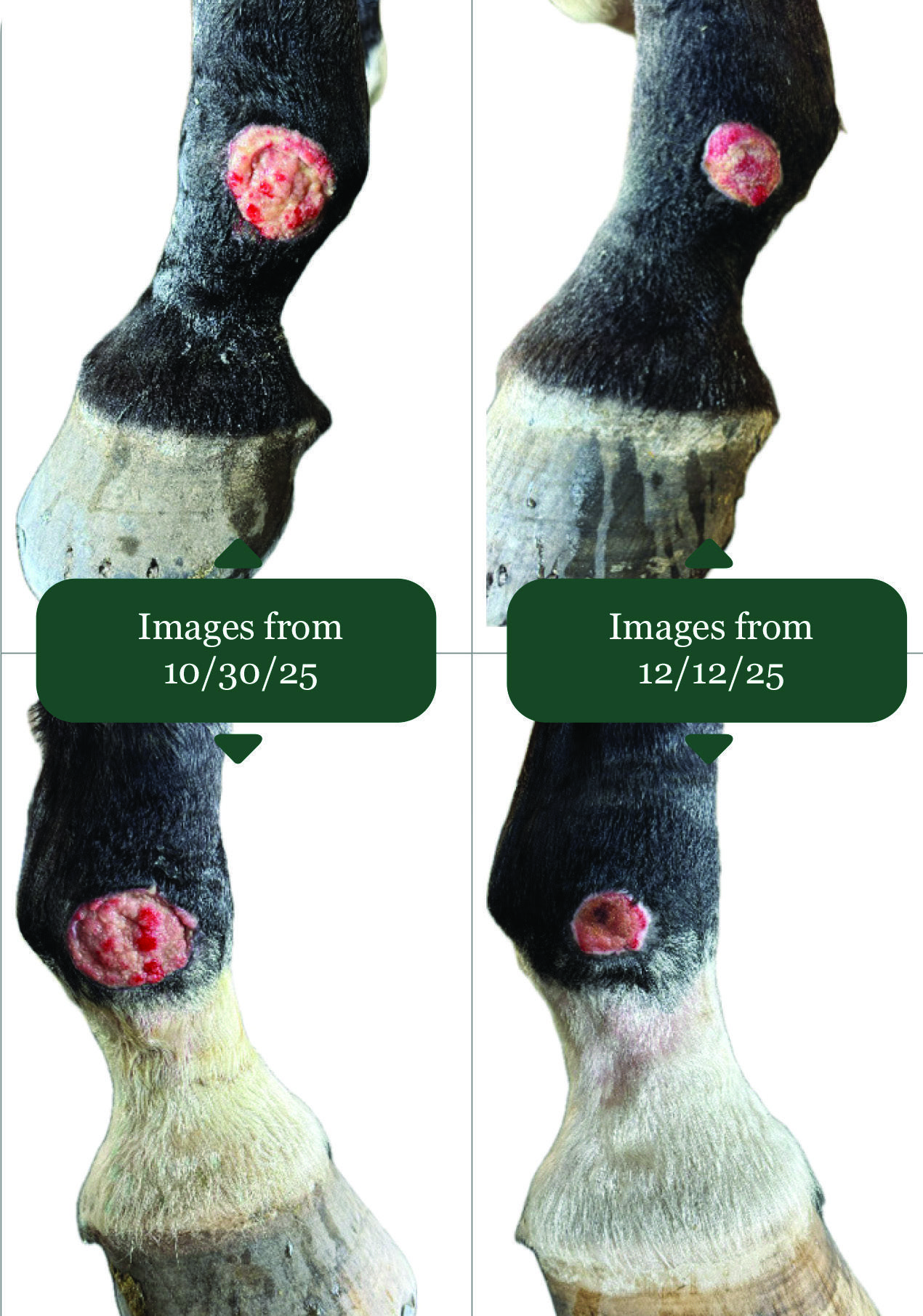
Wound Healing

Original clinical comparison images from the Wound Healing case report

An 18-year-old Warmblood with persistent wounds over both front fetlocks showed reported improvement in wound size, granulation tissue, discharge and swelling during a 40-day course following extensive prior treatment.

Read the clinical details

Case study: 18-year-old Warmblood gelding used for dressage treated for non-healing wounds over the lateral aspect of both front fetlocks.

Treatment: Surgical debridement (9/4/25 and 10/23/25), antibiotics, Phovia fluorescent light therapy, consistent bandaging, and multiple topical creams with minimal improvement. Started daily subcutaneous injections of BPC-157/TB-500 on 10/30/25.

Reported outcome: Marked improvement of wound size, granulation tissue uniformity, discharge quantity, and swelling throughout 40-day course of peptide therapy.

Download print handout

PDF · 1 page · 18-year-old Warmblood gelding

Clinical photographs include wounds and diagnostic imaging. The downloadable reports retain their original clinician credits and clinical figures.

Ongoing clinical studies

The next questions
in clinical research.

Nucli’s clinical library brings the current reports together with the research areas identified for continued investigation.

Soft tissue injury

Tendon and ligament recovery

A pilot research program is examining the safety and potential clinical role of peptide-based approaches in tendon and ligament injury. Completed findings will be shared with study design and limitations when available.

Gastrointestinal health

Questions beyond mobility

Research is exploring the potential role of peptides in equine gastrointestinal conditions. This is an area of investigation; no completed gastrointestinal study is presented in this collection.

Meet the lead researcher

Charley McColough,
BVetMed

Founder, Whetstone Equine
Equine performance medicine and clinical research

Dr. McColough brings a background in biomedical research at Weill Cornell Medical College and a veterinary degree from the Royal Veterinary College in London to his work in equine clinical practice.

His research examines the safety and potential clinical role of peptide-based interventions in equine patients, connecting the questions raised in rehabilitation with structured clinical observation.

Connect with Nucli

Looking for more scientific context or resources for your practice?

For veterinary professional education. Research publication does not establish regulatory approval, treatment efficacy or suitability for an individual animal. Clinical decisions belong with a licensed veterinarian.